

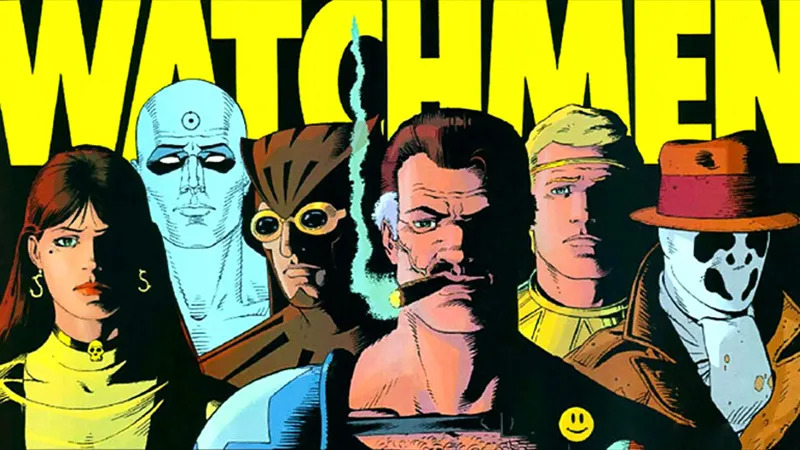
Watchmen: A Dark Mirror of Heroism
Alan Moore and Dave Gibbons’ Watchmen isn’t just a graphic novel—it’s a cultural
milestone that redefined what comics could be. Published by DC Comics in 1986–1987,
Watchmen deconstructs the idea of the superhero, stripping away bright costumes and
noble ideals to reveal flawed, often broken people beneath the masks.
Set in an alternate 1980s America teetering on the brink of nuclear war, the story follows
a disbanded team of costumed vigilantes investigating the murder of one of their own,
The Comedian. What unfolds is a complex, layered narrative exploring themes of
power, morality, and the cost of trying to save the world.
Gritty artwork complements Moore’s dense storytelling, capturing a noir atmosphere
where every panel feels intentional. Characters like the godlike Dr. Manhattan, the
uncompromising Rorschach, and the world-weary Nite Owl challenge our notions of
heroism, asking uncomfortable questions that remain relevant today.
Nearly four decades later, Watchmen endures not just as a comic, but as a profound
critique of society and human nature—a timeless watch on who watches the watchmen.

 No products in the cart.